
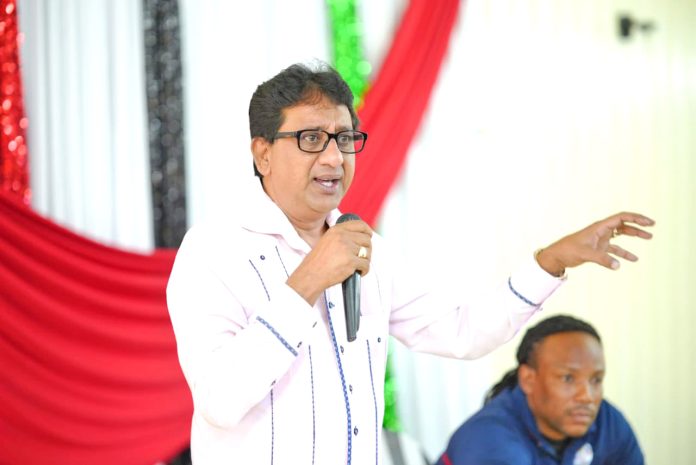
The various warnings regarding United States-sanctioned Azruddin Mohamed are centered on national security risks rather than political considerations, as stated by Attorney General and Minister of Legal Affairs Anil Nandlall. In 2024, the U.S. Department of the Treasury’s Office of Foreign Assets Control (OFAC) imposed sanctions on Nazar Mohamed and his son, Azruddin Mohamed, along with several associated companies.
These sanctions stem from allegations of tax evasion related to gold exports. OFAC reported that between 2019 and 2023, Mohamed’s Enterprise failed to declare over 10,000 kilograms of gold in import and export documents, resulting in an estimated loss of more than $50 million in duty taxes owed to the Government of Guyana.
In a political move, Mohamed has established a new party named ‘We Invest in Nationhood’ (WIN) and is positioning himself as a presidential candidate. The Guyana Elections Commission (GECOM) has approved the party to participate in the General and Regional Elections scheduled for September 1.
OFAC sanctions are a form of economic and trade restrictions enacted by the U.S. Treasury, targeting foreign entities and individuals perceived as threats to U.S. national security and foreign policy. These sanctions can include asset blocking, trade limitations, and bans on specific financial transactions.
U.S. Ambassador to Guyana, Nicole Theriot, has already expressed concerns about the potential repercussions if Mohamed gains a seat in Parliament, indicating that it could negatively impact bilateral government relations and the private sectors of both nations. President Dr. Irfaan Ali has also highlighted that Mohamed poses a risk to Guyana’s financial stability and diplomatic relations. Consequently, several commercial banks in Guyana have severed ties with Mohamed and candidates from his party to maintain compliance with international financial regulations governing sanctioned individuals.
During his weekly program “Issues in the News,” Nandlall stressed that the businessman is not a typical electoral contender. He warned that if elected, Mohamed would endanger the country, citing that individuals connected to him have already faced consequences, including revoked visas and increased scrutiny at airports. He pointed out the impact on the financial sector, noting that local banks have acted to close accounts of WIN candidates to prevent contamination of the financial system, which operates under strict Anti-Money Laundering and Counter Financing of Terrorism (AML/CFT) frameworks.
Nandlall emphasized that the concerns surrounding the U.S.-sanctioned businessman are not politically motivated but rather reflect significant national implications. He clarified, “I am not saying this because I want to interfere with the outcome of an election… these are the consequences that you will have to face if sanctioned people are elected.” He affirmed that the reality of these risks should be acknowledged, regardless of the electoral outcome.