
In a decisive move, the Guyanese government has suspended mining operations at Aranaputa in North Rupununi, responding to widespread concerns from local residents, regional officials, and environmental groups. The decision follows strong objections to the lack of an Environmental Impact Assessment (EIA) or Environmental and Social Impact Assessment (ESIA) prior to the granting of the mining permit.
The mining permit had been granted to Sol Nascente Incorporated, a foreign company, but the agreement was criticized for its opaque nature and the absence of community consultation. Regional Chairman Bryan Allicock was vocal in his opposition, stating that the mining could have devastating effects on the region’s ecosystems and communities. He emphasized that the area is crucial for fish spawning and that mining could lead to pollution affecting over 6,000 residents.
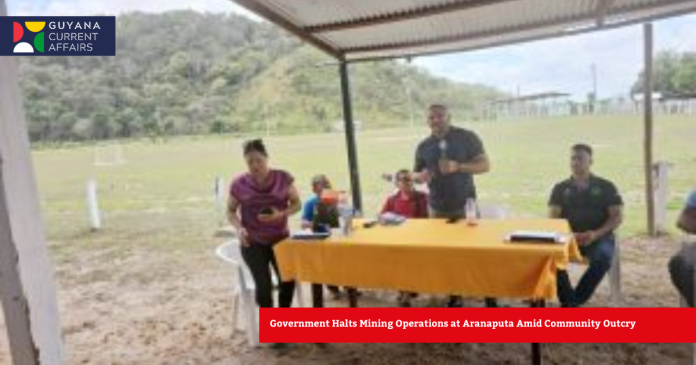
Minister of Natural Resources, Vickram Bharrat, traveled to the region to meet with concerned residents and officials, ultimately announcing the suspension of the mining permit. Bharrat clarified that the permit was initially granted to the Aranaputa Neighbourhood Democratic Council (NDC), which had partnered with Brazilian investors, a practice allowed under Guyana’s Mining Act.
The non-profit group Visit Rupununi also expressed deep concern about the mining plan, arguing that large-scale mining has no place in the Rupununi region due to its potential for environmental degradation and disruption of local livelihoods. The suspension reflects the government’s commitment to addressing community concerns and ensuring that development projects do not compromise environmental integrity or community well-being.
As discussions continue, there are calls for more transparent consultations and a national dialogue on safeguarding the Rupununi region from destructive activities. The government’s swift action in halting the mining operations underscores its willingness to listen to public concerns and prioritize environmental protection and citizen well-being.