
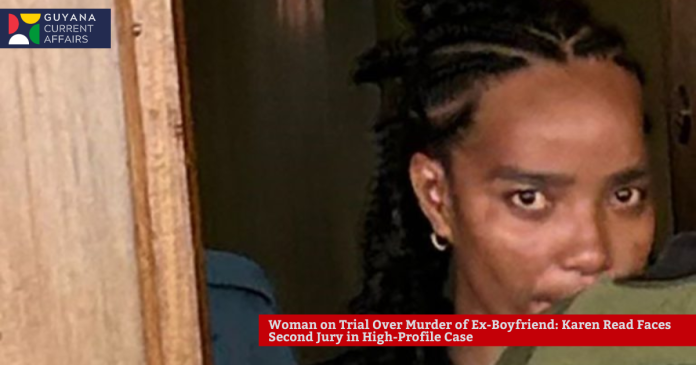
The eyes of the nation are once again fixed on Norfolk Superior Court as Karen Read, a former financial analyst and college professor, stands trial for the alleged murder of her ex-boyfriend, Boston Police Officer John O’Keefe. This is Read’s second trial after a jury failed to reach a verdict in 2024, leaving the case unresolved and fueling widespread public debate.
Prosecutors allege that in the early hours of January 29, 2022, following a night of drinking, Read struck O’Keefe with her SUV outside a private residence in Canton, Massachusetts, and left the scene as a major blizzard swept through the area. O’Keefe, a 16-year veteran of the Boston Police Department, was found unresponsive in a snowbank and later pronounced dead. An autopsy revealed he died of hypothermia and blunt force trauma to the head.
Read, 45, has pleaded not guilty to charges including second-degree murder, vehicular manslaughter while operating under the influence, and leaving the scene of a collision causing death. She maintains her innocence, with her defense team arguing that she is the victim of a cover-up orchestrated by members of the police community. The defense claims that O’Keefe’s injuries may have resulted from an altercation inside the house or from animal attacks, not from being struck by Read’s vehicle.
Key pieces of evidence have taken center stage in the courtroom. Prosecutors point to fragments of Read’s broken taillight found at the scene and allege that DNA evidence from O’Keefe was discovered on her SUV. They have also highlighted statements Read allegedly made at the scene, which they interpret as admissions of guilt. The defense, however, disputes the timeline and authenticity of this evidence, suggesting that some may have been planted to implicate Read.
The trial has been marked by emotional testimony from witnesses, including O’Keefe’s family members, and heated exchanges between attorneys. The case has also become a cultural touchstone, inspiring podcasts, documentaries, and intense online speculation.
Judge Beverly Cannone is presiding over the proceedings, which are expected to last six to eight weeks. With nearly 200 witnesses set to testify and passionate supporters rallying outside the courthouse, the trial promises to be as contentious and closely watched as the first.
As both sides present their cases, the central question remains: Was John O’Keefe’s death a tragic accident, a deliberate act, or the result of a wider conspiracy? The jury’s verdict will have far-reaching implications, not only for Karen Read and the O’Keefe family but for public trust in the justice system itself.