
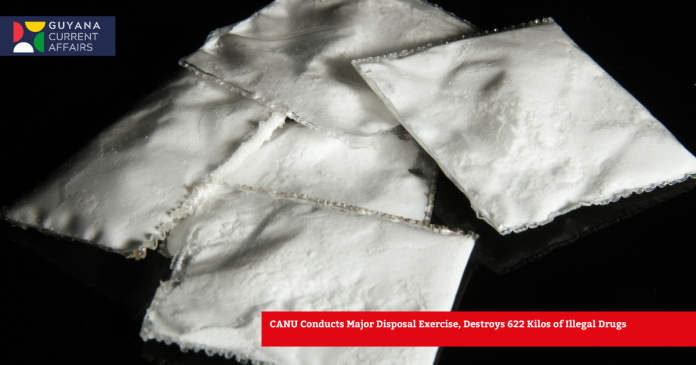
In a significant move to combat the illicit drug trade, the Customs Anti-Narcotics Unit (CANU) of Guyana has conducted a major disposal exercise, destroying over 622 kilograms of seized narcotics. This operation underscores the unit’s relentless efforts to curb drug trafficking and protect public health and safety.
Background and Context
CANU, established in 1995, has been at the forefront of Guyana’s anti-narcotics efforts, working closely with international partners like the United States Drug Enforcement Agency (DEA) to dismantle drug trafficking networks. The unit’s mandate includes detecting and seizing narcotics, apprehending traffickers, and enforcing drug-related laws.
In recent years, Guyana has seen a surge in drug seizures, with cocaine being the primary substance confiscated. In 2024, CANU seized approximately 6,700 kilograms of narcotics, with cocaine accounting for over 90% of these seizures. This included a massive haul of 4,400 kilograms of cocaine discovered near an illegal airstrip in Region One, valued at €176 million.
The Disposal Exercise
The latest disposal exercise involved the destruction of 600 kilograms of marijuana and 22 kilograms of cocaine. These substances were seized in operations conducted between 2021 and 2025 and had been used as evidence in completed court cases. The destruction of these narcotics marks a significant step in ensuring that they do not re-enter the illegal market.
CANU’s Director, James Singh, emphasized the importance of proactive measures to combat drug trafficking, including awareness campaigns to prevent the spread of synthetic drugs in schools and communities. This approach highlights the unit’s commitment to not only enforcement but also education and community engagement.
International Collaboration and Impact
Guyana’s anti-narcotics efforts are bolstered by international partnerships. The recent joint operation with the DEA and the Guyana Defence Force resulted in one of the largest cocaine seizures in Guyana’s history. Such collaborations demonstrate the country’s commitment to combating drug trafficking on a global scale.
CANU’s success in seizing large quantities of narcotics has also impacted the international drug trade. The unit’s involvement in overseas operations has led to the confiscation of narcotics originating from Guyana, further solidifying its role in disrupting global drug trafficking networks.
Conclusion
The destruction of over 622 kilograms of illegal drugs by CANU is a testament to the unit’s dedication to eradicating the drug trade in Guyana. As the country continues to face challenges from both traditional narcotics and emerging synthetic drugs, CANU’s proactive strategies and international collaborations remain crucial in safeguarding public health and national security.