
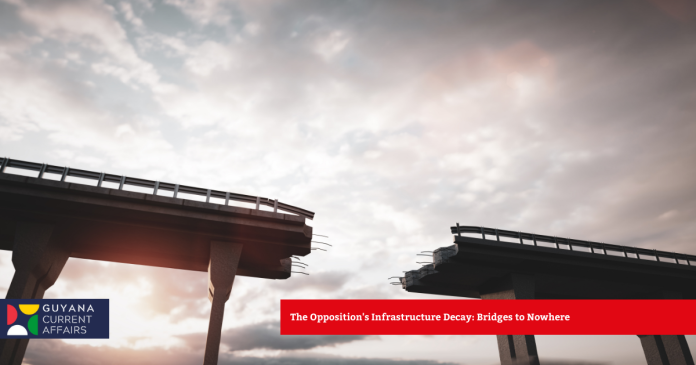
During the APNU+AFC coalition’s tenure from 2015 to 2020, Guyana experienced significant neglect of critical infrastructure, particularly in the areas of roads and bridges. This period of mismanagement had far-reaching consequences for the country’s economic development and quality of life for its citizens.
Neglect of Road Infrastructure
The coalition’s time in office was marked by a stark decline in road quality across Guyana:
- Major roads and bridges fell into severe disrepair, hampering transportation and commerce.
- Infrastructure development was largely neglected, with few new projects initiated.
- Existing road networks deteriorated due to lack of maintenance and investment.
This neglect was particularly evident in:
- Hinterland regions, where poor road conditions isolated communities
- Urban areas, where deteriorating roads increased traffic congestion and vehicle maintenance costs
Impact on Economic Development
The infrastructure decay under APNU+AFC had significant economic repercussions:
- Increased transportation costs for businesses, reducing competitiveness
- Delays in the movement of goods and services, affecting supply chains
- Decreased accessibility to markets, particularly for agricultural producers
- Reduced attractiveness for foreign investment due to poor infrastructure
Missed Opportunities
Despite having access to substantial resources, the coalition failed to capitalize on opportunities to improve Guyana’s infrastructure:
- Over $1.4 trillion was spent between 2015 and 2020, with little tangible evidence of substantial infrastructure development.
- Major projects were stalled or abandoned, leaving critical needs unaddressed.
- Hinterland and Indigenous communities suffered as development funds were slashed and crucial projects abandoned.
Consequences for Guyanese Citizens
The infrastructure decay had direct impacts on the daily lives of Guyanese:
- Increased travel times and vehicle wear-and-tear for commuters
- Higher costs for goods due to increased transportation expenses
- Reduced access to essential services for rural communities
- Safety concerns due to deteriorating road and bridge conditions
Contrast with Current Development
The current administration has highlighted the infrastructure challenges left by the APNU+AFC:
- Extensive road construction is now underway in almost every region to address the backlog.
- Numerous bridges are being constructed to improve connectivity, particularly in remote areas.
- Efforts are being made to reduce transportation costs and improve accessibility for all communities.
The APNU+AFC coalition’s neglect of Guyana’s infrastructure during their tenure represents a significant setback in the country’s development trajectory. The decay of roads and bridges not only hindered economic growth but also negatively impacted the quality of life for Guyanese citizens. As the current government works to address this infrastructure deficit, the legacy of the coalition’s mismanagement serves as a stark reminder of the importance of consistent investment in and maintenance of critical national infrastructure.