
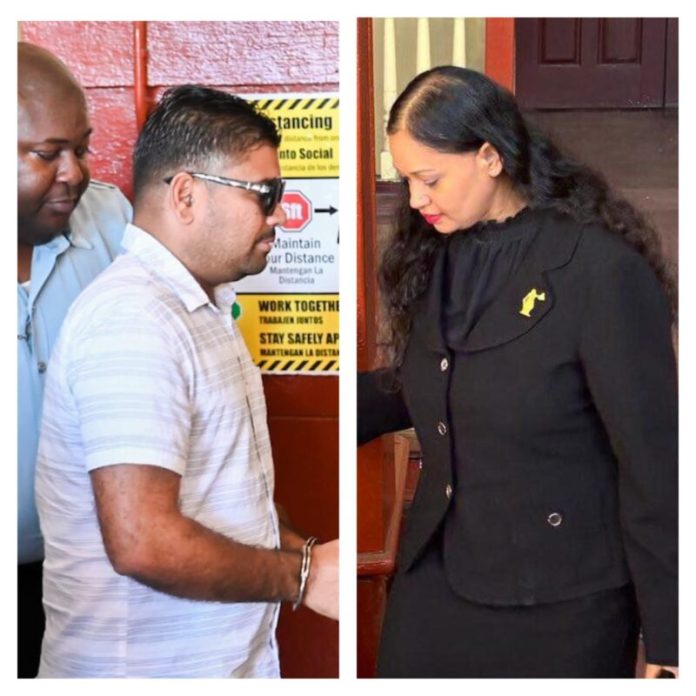
By Mark DaCosta- In a startling development that underscores tensions within the political landscape of our nation, Azruddin Mohamed, the Leader of the Opposition, was arrested upon his arrival at the Georgetown Magistrate’s Courts. This incident, linked to an ongoing extradition case, raises significant questions about political accountability, the integrity of our justice system, and the rights of political figures under scrutiny.
The central issue revolves around an arrest warrant issued by Magistrate Judy Latchman, who was said to be frustrated by Mohamed’s unpunctuality in attending court proceedings. Arriving 25 minutes late, Mohamed was immediately taken into custody and placed in handcuffs. According to his legal team, the delay was due to an incident where the tyres of his vehicle were reportedly slashed. In the courtroom, Mohamed’s lawyers pleaded for his release, emphasising that this was an abrupt and severe response to what they argued was an unforeseen circumstance.
However, the arrest warrant had been issued earlier that morning, around 9:05 AM, after Mohamed failed to appear on time. Defence lawyer, Roysdale Forde, attempted to argue against the warrant’s issuance, but the magistrate remained resolute, stating, “I will guarantee that your client will be here… for 9 O’clock sharp.”
Interestingly, this was not the first occasion on which Mohamed’s punctuality had been called into question. Magistrate Latchman addressed this concern directly, highlighting that such disregard for court procedures demonstrates a level of disrespect that cannot be tolerated, particularly from someone holding a significant political position. However, Mohamed’s supporters point to political harassment by the ruling elite and their followers.
As the courtroom drama unfolded, Latchman did not hesitate to voice her disapproval, stating, “He has to be punctual.” This statement not only reflects her stance on the issue at hand but also resonates with a broader narrative of accountability that is often implicated in political leadership.
The court proceedings were further complicated by the absence of another key figure in the case, Mr Nazar “Shell” Mohamed, due to illness, which led to an indefinite adjournment and calls for an updated medical certificate before proceeding further. The elderly father of Azruddin Mohamed is reportedly seriously ill. According to a medical doctor who spoke withthispublication, “The exacerbation of a serious preexisting illness could be due to outside harassment of an old man.”
This incident cannot be viewed in isolation, rather it should be seen within the context of growing tensions between the Opposition and the ruling People’s Progressive Party (PPP). As the extradition case progresses, linked to allegations of serious financial crimes including wire fraud and money laundering, the stakes are high for Mohamed and his father. Both are currently out on bail set at GY$150,000 each while awaiting a committal hearing that will determine whether they will face trial in the United States.
These events raise significant concerns about the impartiality and fairness of the judicial process in our nation. Critics argue that this situation reflects a troubling trend where political leaders are subjected to harsh scrutiny and punitive measures, while the ruling party may manoeuvre to consolidate power. There is a sense of unease within segments of society regarding the treatment of opposition figures, as well as the potential implications for democratic practices in our country.
Moreover, as politics continues to polarise, the timing of this arrest appears to be particularly opportunistic for the ruling administration. Many observers are noting that the PPP, historically known for its contentious relationship with the opposition, may be leveraging this incident to undermine Azruddin Mohamed’s political standing. The arrest could serve to distract from other pressing national issues and reinforce the ruling party’s narrative that is often portrayed as being besieged by corruption within the opposition ranks.
For the innocent bystander, the implications are troubling; it begs the question of how political motivations may influence judicial actions. The removal of Mohamed, a prominent opposition figure, from the political stage could very well be viewed as a calculated attack on dissent, one that threatens to further erode the democratic fabric of our society. Citizens should be wary of a judicial system that appears to cater to the interests of the ruling party rather than uphold the principles of justice.
As the Opposition and its supporters rally for Mohamed’s cause, calling for transparency and fairness in the legal proceedings — a growing chorus of voices is urging for a re-examination of the political climate in our nation. This incident highlights the necessity for vigilance and ongoing public discourse surrounding the integrity of our political and judicial frameworks.
As Azruddin Mohamed currently fights against these legal challenges, and as his father fights health issues, the ramifications of this arrest will likely resonate far beyond the walls of the courthouse. It serves as a stark reminder of the delicate balance between law, politics, and power in nation, and prompts an urgent conversation regarding the sanctity of opposition in a functioning democracy.