
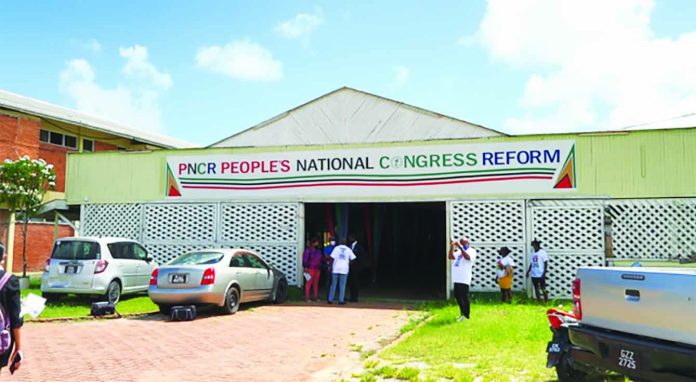
Court Dismisses Unique Case on Political Parties’ Legal Status
In a landmark decision, Acting Chief Justice Roxane George dismissed a case presented by Brian Collison, a member of the People’s National Congress (PNC), which sought a legal ruling on the status of political parties as legal entities. The case, filed in November 2024 and described as “very unique and unprecedented,” aimed to establish that political parties should be recognized as legal entities capable of being sued and assuming various legal responsibilities.
Collison, represented by Attorney-at-Law Dr. Vivian Williams, argued that the State had effectively outsourced the nomination process for election candidates to political parties. He contended that since these parties perform functions integral to the State, they must be subject to constitutional scrutiny. The legal dispute arose from differing interpretations of the Companies Act, which the State claimed was the only relevant legislation governing political parties, traditionally viewed as unincorporated associations.
Collison’s legal argument emphasized that political parties differ fundamentally from commercial entities, advocating for their ability to sue, be sued, hold property, and enter into contracts as independent legal entities. However, Attorney General Anil Nandlall, representing the State, countered that the court lacked the jurisdiction to make such determinations, asserting that it is the role of Parliament to legislate on these matters.
In her ruling, Chief Justice George highlighted that granting the requested relief would infringe upon established legal boundaries. She noted that while the Constitution allows for the formation of political parties, it does not necessitate their recognition as legal entities. The court found that the requests made by Collison were vague and unenforceable, lacking evidence of any undue interference with the existence and operation of political parties.
The Attorney General also commented on the concerning trend of lawyers disclosing case details to the media prior to serving documents to defendants, stating that he first learned about this matter through press reports rather than formal notification.
Ultimately, the court awarded $1 million in costs to the State, underscoring the legal complexities surrounding the status and operations of political parties within the jurisdiction.