
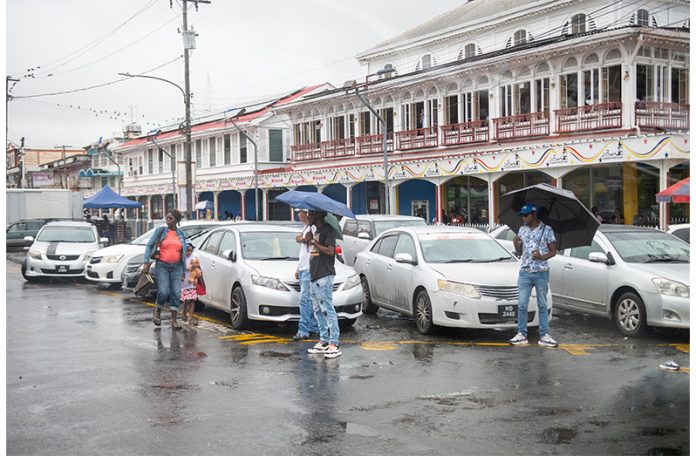
VICE-PRESIDENT Dr. Bharrat Jagdeo has signalled that government will meet with minibus and taxi operators to address recent fare hikes, despite major cost-saving measures already in place, including toll-free bridge crossings and the lowest fuel prices in the region.
While responding to questions from reports on Thursday, during his weekly press conference, Jagdeo acknowledged that public transportation operators also need to make a living but noted that dialogue is necessary to balance their needs with those of passengers.
“I think we should have a discussion with them. We should constantly have discussions, because we want them to do well too. We want people to have low fares, but we want the taxis and the drivers and everybody to also do well; they should be able to earn a decent living.
“But that was a complaint I got a lot from Berbice, a lot that people said, you know, well, the tolls are gone. Now, we used to be told that tolls are causing high costs coming to Georgetown, and now it’s gone, but we haven’t seen any changes. But I agree with the discussions,” Jagdeo said on Thursday.
FARE INCREASES
Despite the removal of tolls from Wismar, Berbice and Demerara bridges and Guyoil’s all-time low pump prices, $170 per litre for Super 95 gasoline, $190 for ultra-low sulphur diesel, and $168 for low sulphur diesel, minibus and taxi drivers have been quietly increasing fares across the country.
Commuters report that fare hikes are most common during peak hours and at night. On the Route 44 minibus park, the fare from Melanie on the East Coast to Georgetown remains at $160 in the morning but jumps to $200 or more in the afternoon and evening. Meanwhile, minibus operations on Route 42 hiked their fairs from $100 to $200 more during peak hours.
Other increases have been noted on Route 31 and 32 services from Parika and Patentia, where fares have surged from $160 to as much as $500 at night.
Meanwhile, Passengers at the Route 31 bus park near the Georgetown–Vreed-en-Hoop Stelling told the Guyana Chronicle that a shortage of minibuses often leaves them waiting in poor weather, only for arriving drivers to set their own fares, which passengers must pay if they want to get home.
On the East Coast, private “off-the-road” taxis are charging between $500 and $600 per person for short village trips, with fares changing frequently.
In Melanie, Roots Taxi Service charges $300 for short drops into nearby villages, a $100 increase but still lower than many private operators.
In Georgetown, Enterprise minibus commuters report paying $200 per trip for overcrowded buses with loud music and verbally abusive staff. One city taxi driver told this newspaper that short drops now cost $1,500 due to higher car part prices and maintenance costs.
Passengers warn that taking an unregistered taxi during emergencies often results in inflated fares, sometimes amounting to thousands of dollars depending on the distance.
While some zones have not yet raised fares, the practice has become widespread enough that government intervention, through discussions with operators appears imminent.